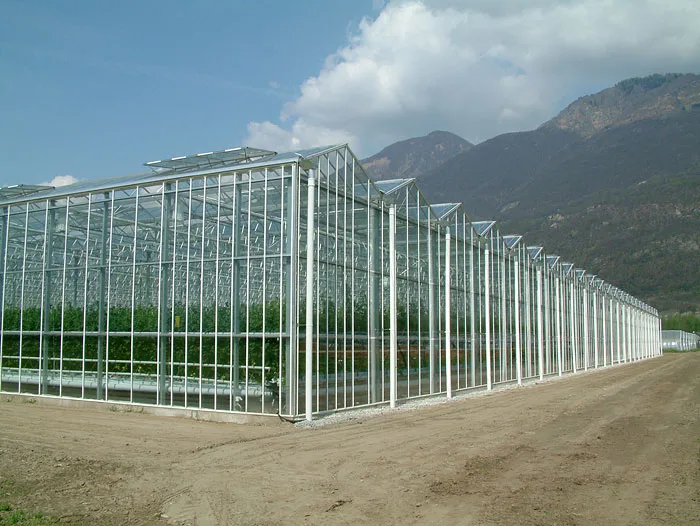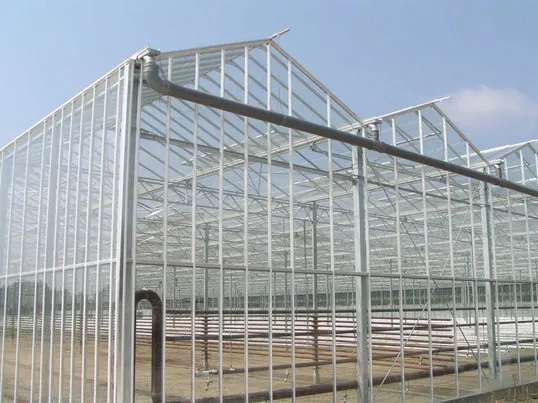
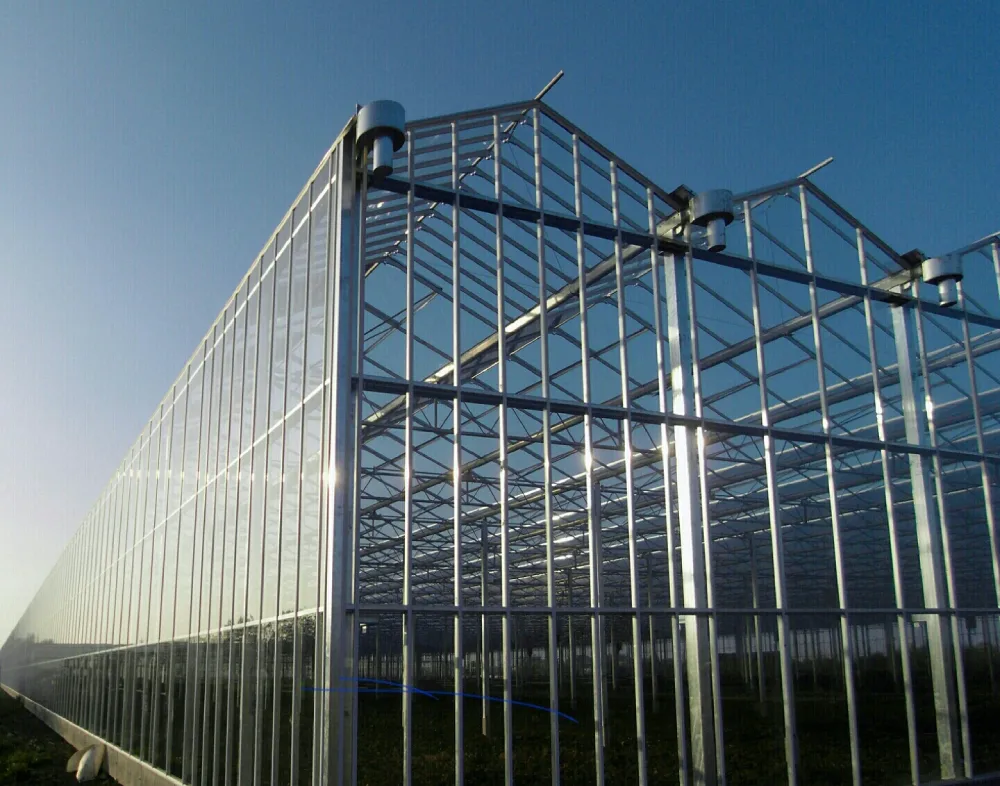
Glass Greenhouses
Glass greenhouses are structures designed using glass coverings along with metal or aluminum frames to provide optimal environmental conditions for plant growth throughout the year. Glass, due to its high transparency and durability, is an ideal choice for transmitting sunlight and creating a controlled environment for agriculture.
In glass greenhouses, sunlight enters through the glass. The glass effectively allows visible light to pass through while preventing infrared (heat) from escaping. Sunlight, after hitting the soil and plants, is converted into heat and retained within the enclosed environment. This heat increases the internal temperature of the greenhouse.
Automated systems for ventilation, heating, cooling, and irrigation precisely regulate temperature, humidity, and CO₂ levels to create optimal growth conditions for crops. The high transparency of glass allows maximum natural light, which positively impacts photosynthesis and plant growth.
Advantages of Glass Greenhouses:
• High light transmission: Glass allows up to 90% of natural light to pass through.
• Durability and long lifespan: Resistant to erosion, UV radiation, and weather changes.
• Attractive and modern appearance: Ideal for exhibition, commercial, and research greenhouses.
• Precise growth condition control: Achieved through smart systems and automation.
• Increased crop productivity: Higher yields compared to open-field or plastic greenhouses.