
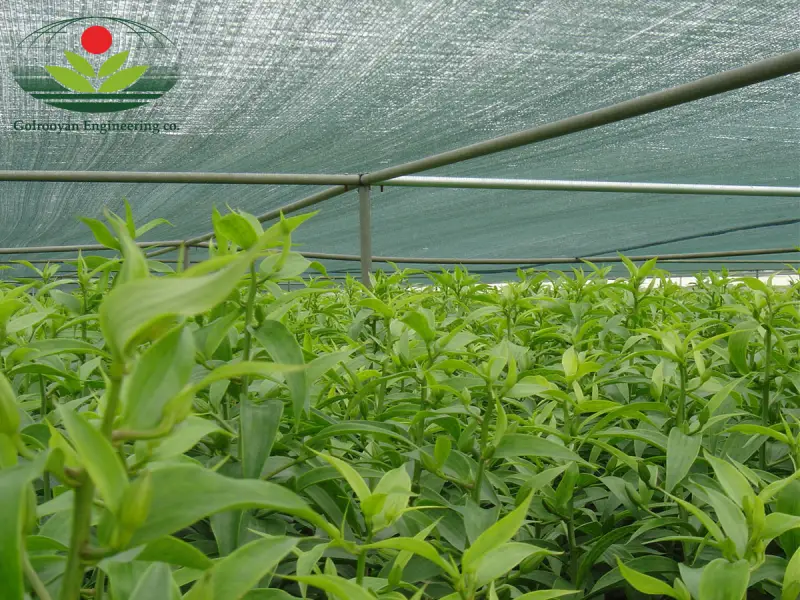
The optimal temperature in greenhouses is usually between 24–26°C, and measures must be taken to prevent excessive heat. One of the best solutions for balancing temperature and sunlight in greenhouses is the use of shade cloth, also known as a shading system.
Direct sunlight contains infrared rays, which can harm or even kill plants. Therefore, shade systems—typically installed outside the greenhouse—are used to protect crops. Plants only need 1–2.5% of sunlight for photosynthesis, which can be supplied using shade cloth. These shades absorb approximately 75% of sunlight and convert it into heat. When the temperature of the shade rises due to absorbed heat, the area underneath cools down, creating a more suitable environment.
Shade cloths are most useful during hot seasons but can be used year-round and are suitable for all types of greenhouses.
Specifications of Shade Cloths:
- Available in green and white colors.
- Shading percentage options: 30%, 50%, and 80%.
- Rolls are 50 meters long, with widths of 2, 4, 6, 8, and 10 meters.
- Materials: Polyethylene or Polypropylene.
- Water-resistant, with density percentages ranging from 12% to 95%.
Benefits of Using Shade Systems:
- Insulates against extreme cold and heat.
- Reduces evaporation and water consumption.
- High durability.
- Protects plants from harmful sunlight.
- Provides optimal light for plants.
- Suitable for all types of greenhouses.
- Cost-effective.
Installation Methods:
- Locking system
- Clamps
We recommend the locking method because it offers better durability, neat installation, and faster setup.