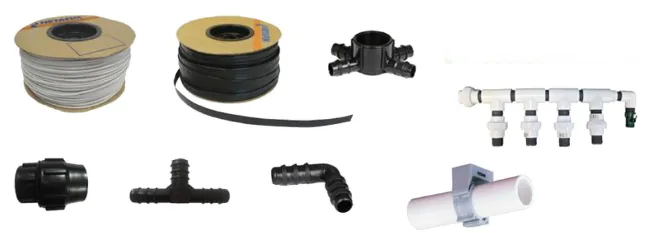
In greenhouses, irrigation is carried out using different methods. The type and amount of irrigation depend on the crop type, region, climate conditions, and the annual water requirements of the cultivation. All of these factors are provided with free consultations at the Golrooyan Technical and Engineering Group.
The choice of irrigation method significantly affects the quality and growth of crops; therefore, it should be determined by a specialist.
Manual or Traditional Irrigation:
This method is not economically efficient and is no longer used by most greenhouse growers. It may still be applied in very small home greenhouses.
Surface or Perimeter Irrigation:
Used mainly in garden-style greenhouses with a fixed bed. This system generally utilizes polyethylene pipes and plastic nozzles that spray water onto the soil surface, under branches, and onto leaves.
Misting Irrigation:
A common greenhouse irrigation method, misting systems run across the greenhouse ceiling. This method is mainly used for propagating cuttings and seedling production. It helps reduce the ambient temperature and provides the required relative humidity.
Drip Irrigation:
This is the most efficient, common, and comprehensive method, providing precise control over water usage. Drip irrigation is suitable for dry and semi-dry climates and is ideal for uniform fertilization. In this method, leaves and stems remain dry, which significantly reduces the risk of diseases and plant damage.

- 021-0000
- info@golrooyan.com